01
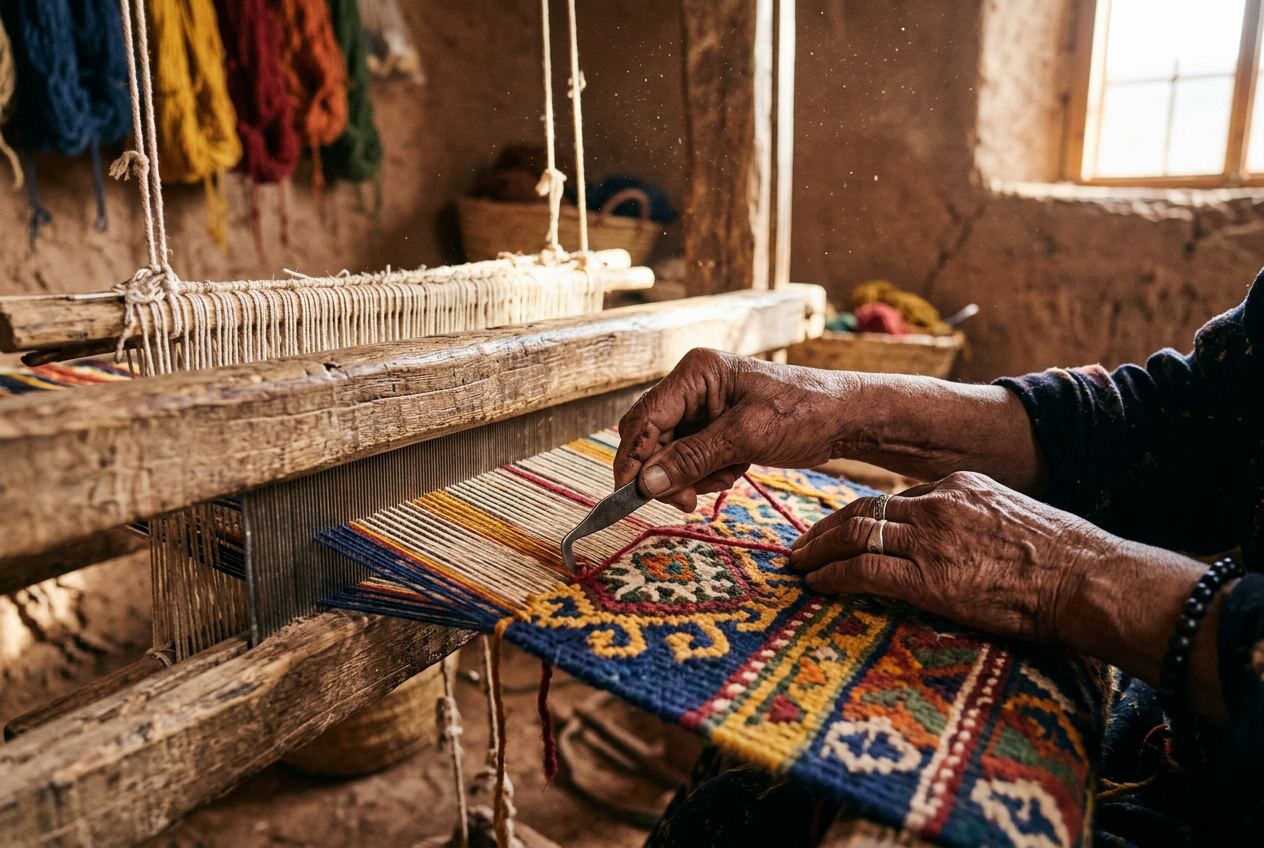
Some weavers say every unfinished carpet keeps the breath of the woman who began it.
The Six Pillars · I
The Hands of the Maghreb
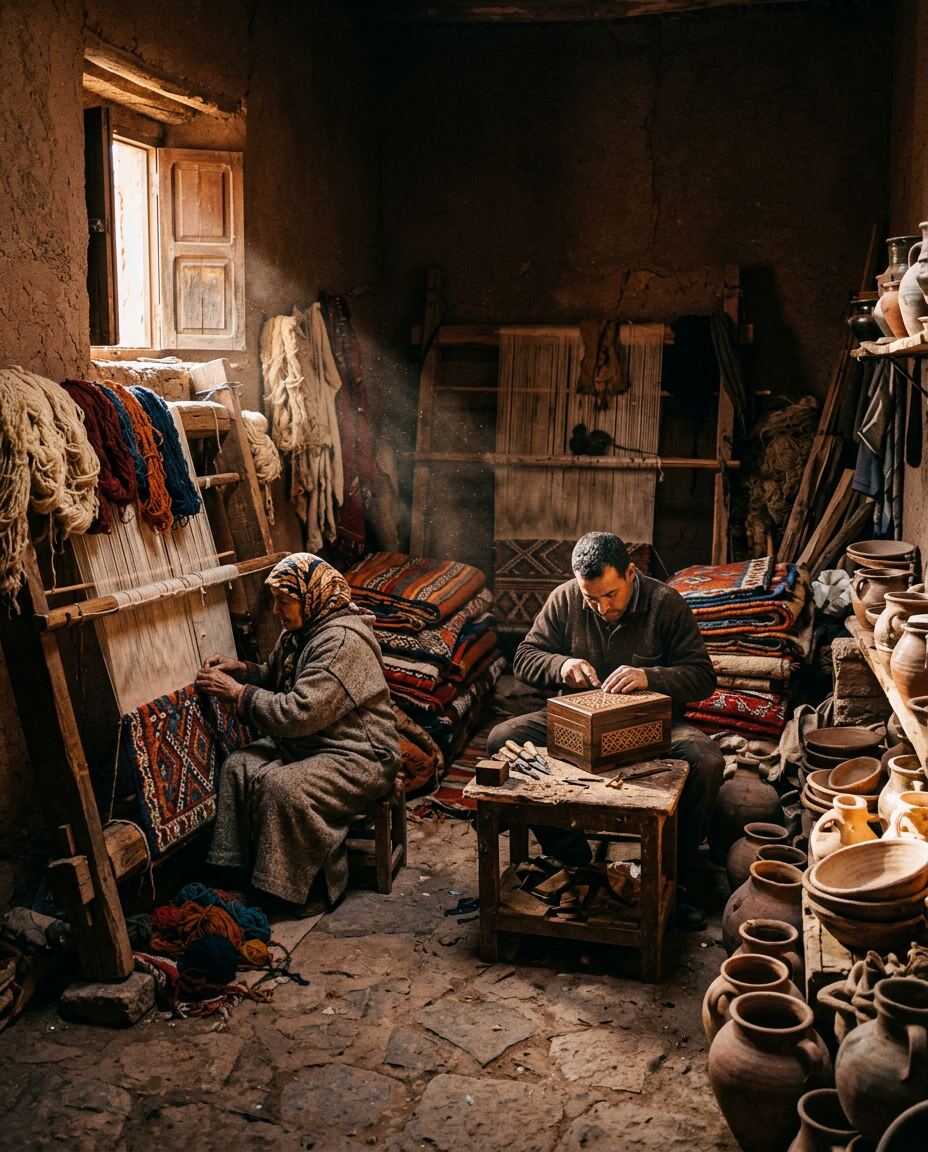
Tawada gathers the tactile arts of Morocco into one lived chapter: weaving, carpet knotting, pottery, and the intimate geometry of thuya marquetry. It is less a workshop than an encounter with the patience of the hand.
The Story
In the mountain villages and old medinas, nothing begins with spectacle. It begins with the repeated gesture: a thread pulled through the loom, clay pressed against the wheel, cedar dust rising from a chisel cut. Tawada takes visitors into the quiet rooms where objects are still born slowly. The experience follows the rhythm of artisans whose knowledge is not written in manuals but carried in muscle memory, family discipline, and the silence that surrounds concentration. You do not merely observe the making of a carpet or a box. You learn why motifs travel from tribe to tribe, why a curve in pottery answers the shape of a hand, and why thuya wood is prized not only for its scent but for the patient marquetry that turns grain into ornament. The beauty of this pillar lies in detail: tiny corrections, inherited codes, and the conviction that an object made well can outlive the room where it was created.
Highlights
Heritage
Across Amazigh territories, weaving has long carried memory — of dowries, migrations, harvests and protective symbols. Pottery preserved water and grain, while thuya craftsmanship flourished in the Atlantic corridor as one of Morocco's most refined domestic arts.
01
Some weavers say every unfinished carpet keeps the breath of the woman who began it.
02
Master cabinet makers in the old ports speak of thuya roots as wood that remembers the sea wind.
03
Village potters still repeat that a cracked vessel warns against a guest who arrives with a troubled heart.