01
Stories of the djinn tribunal describe a court that gathers at night to judge hidden wrongs beyond human reach.
The Six Pillars · VI
Marabouts · Synagogues · Churches
Soufisme gathers Morocco's mystical atmospheres: shrines of saints, Gnawa trance, retreat, prayer, healing chants and the invisible geographies of the unseen.
The Story
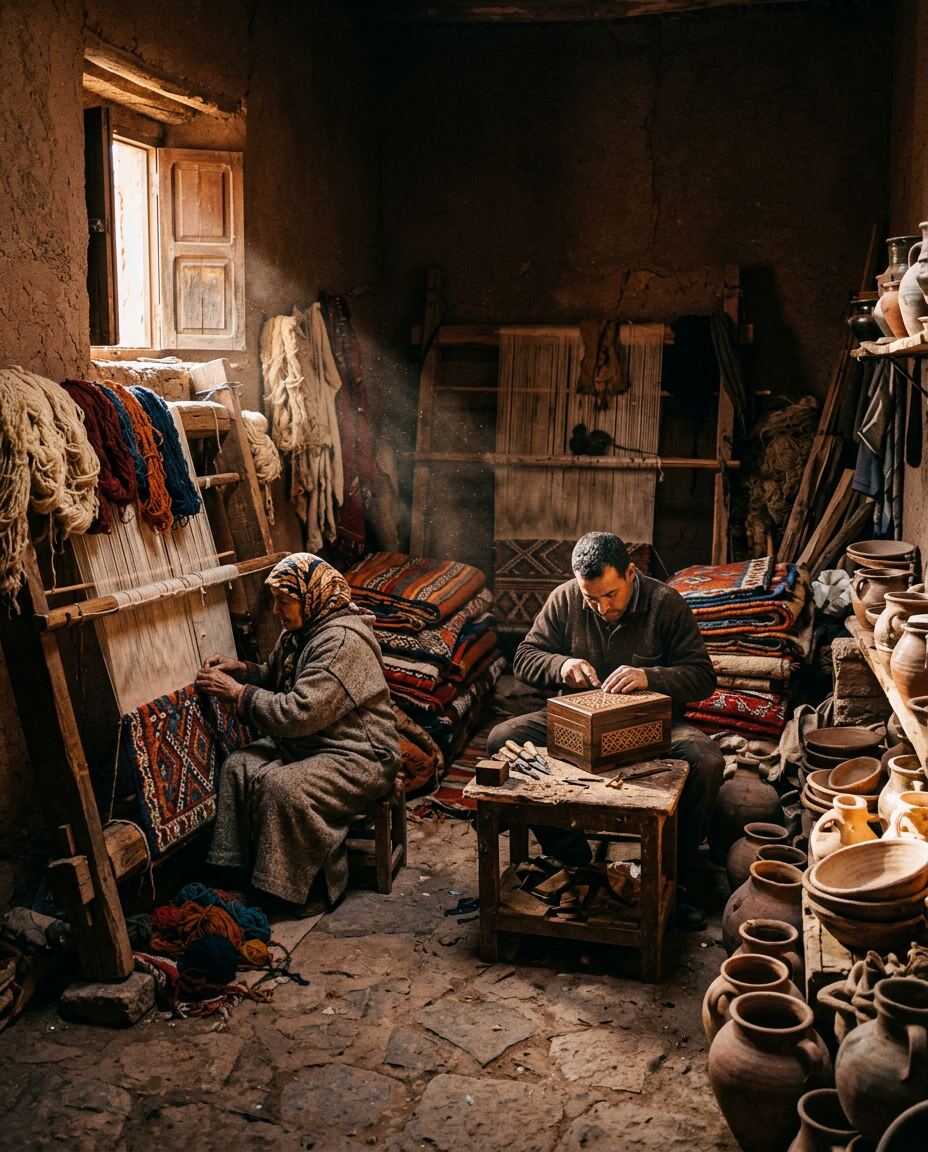
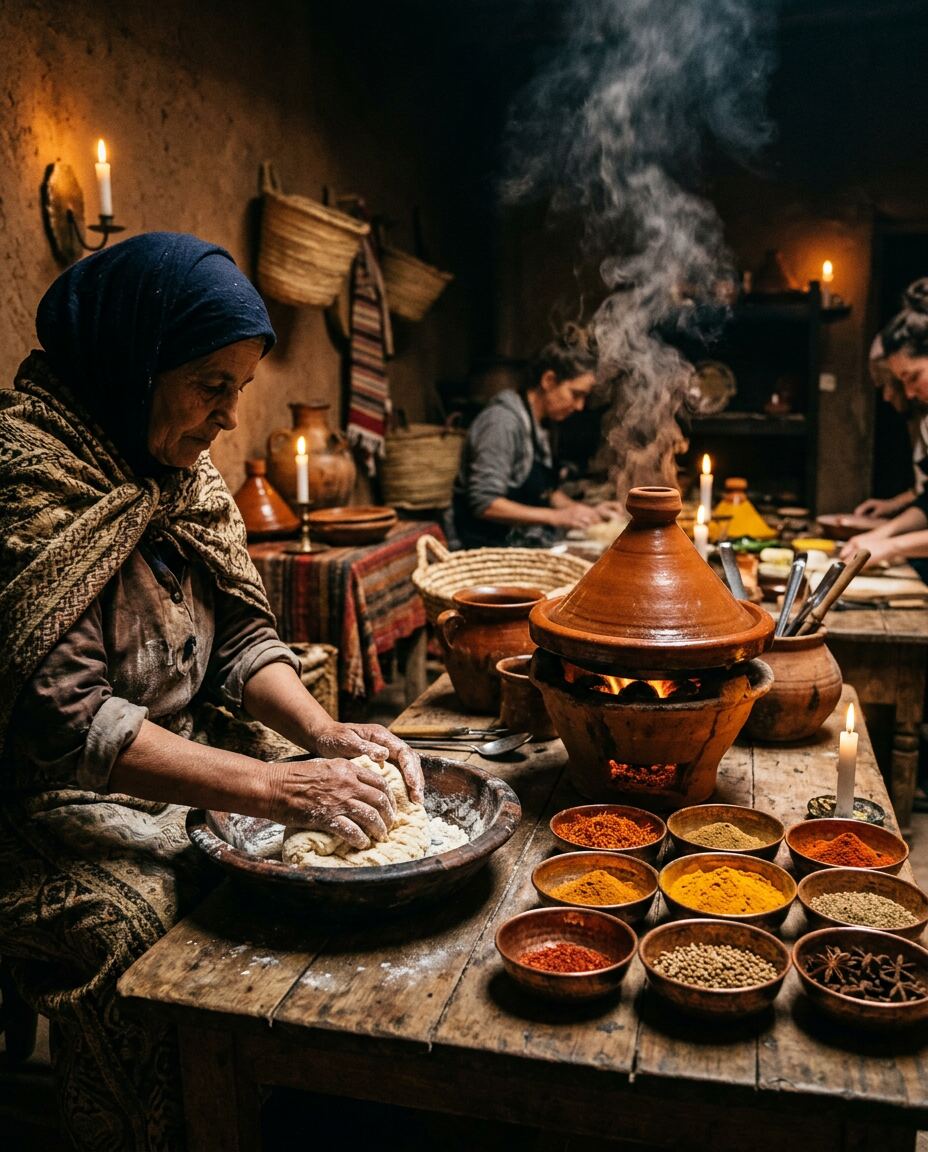
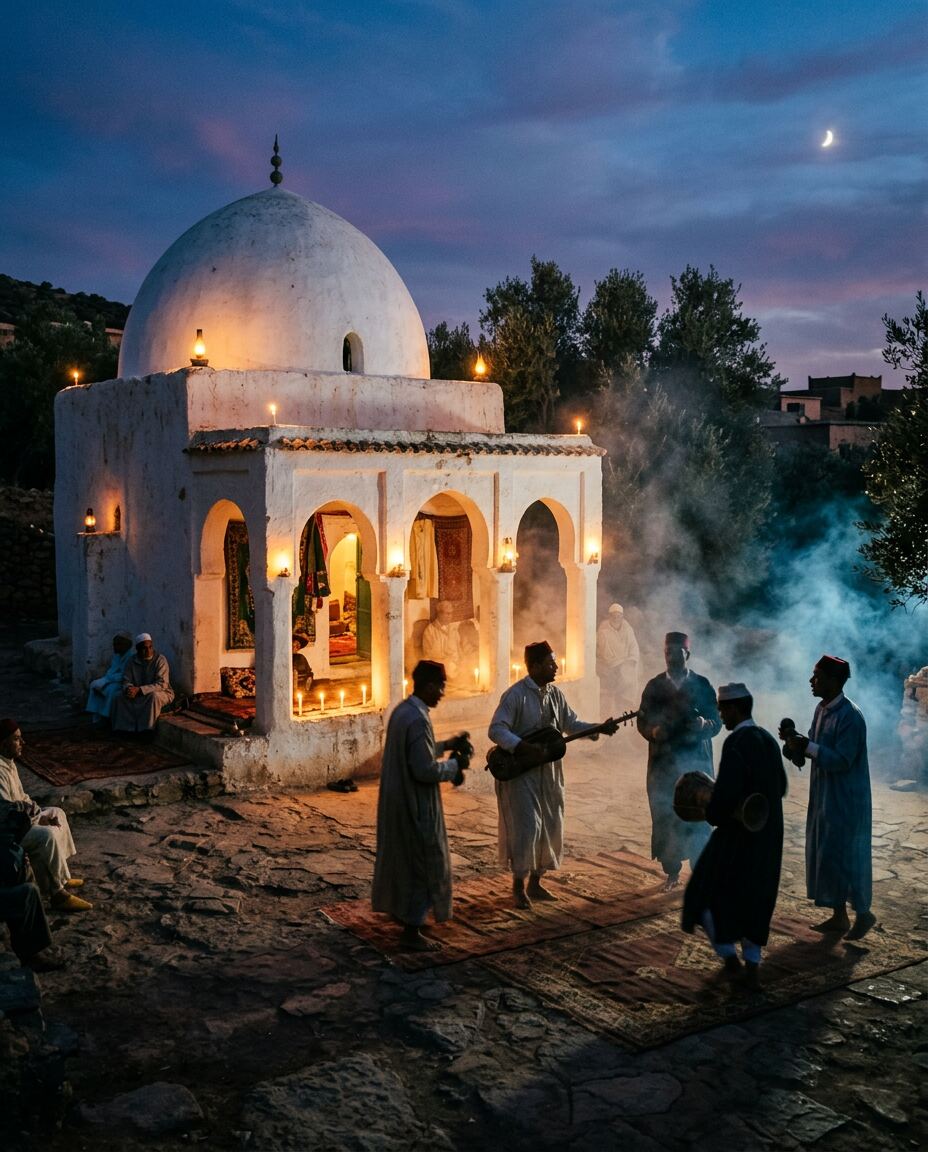
Morocco's sacred landscape is not limited to official monuments. It extends through marabout tombs on hills, zawiyas hidden in medinas, courtyards where Gnawa rhythms intensify after dark, and remote places where people still seek retreat, healing or interpretation of dreams. Soufisme approaches this world with reverence. The point is not exotic display, but immersion in forms of spiritual life where music, repetition, movement and silence all become ways of crossing from the visible to the inward. This axis is also the home of stories. Morocco's mystical imagination has room for saints, baraka, guardian places, djinn, warning dreams, and courts of the unseen where justice is imagined outside human institutions. The result is a chapter filled with depth and ambiguity — devotional, poetic, sometimes unsettling, always alive. It is perhaps the most secret of the pillars because it depends less on monument than on atmosphere.
Highlights
Heritage
Sufi brotherhoods, saint veneration and Gnawa ritual have shaped Morocco's spiritual history for centuries. Jewish shrines, churches and Muslim sanctuaries together form a broader sacred map where pilgrimage and blessing remain deeply rooted.
01
Stories of the djinn tribunal describe a court that gathers at night to judge hidden wrongs beyond human reach.
02
Many marabout shrines are visited because their saint is believed to continue acting after death through baraka.
03
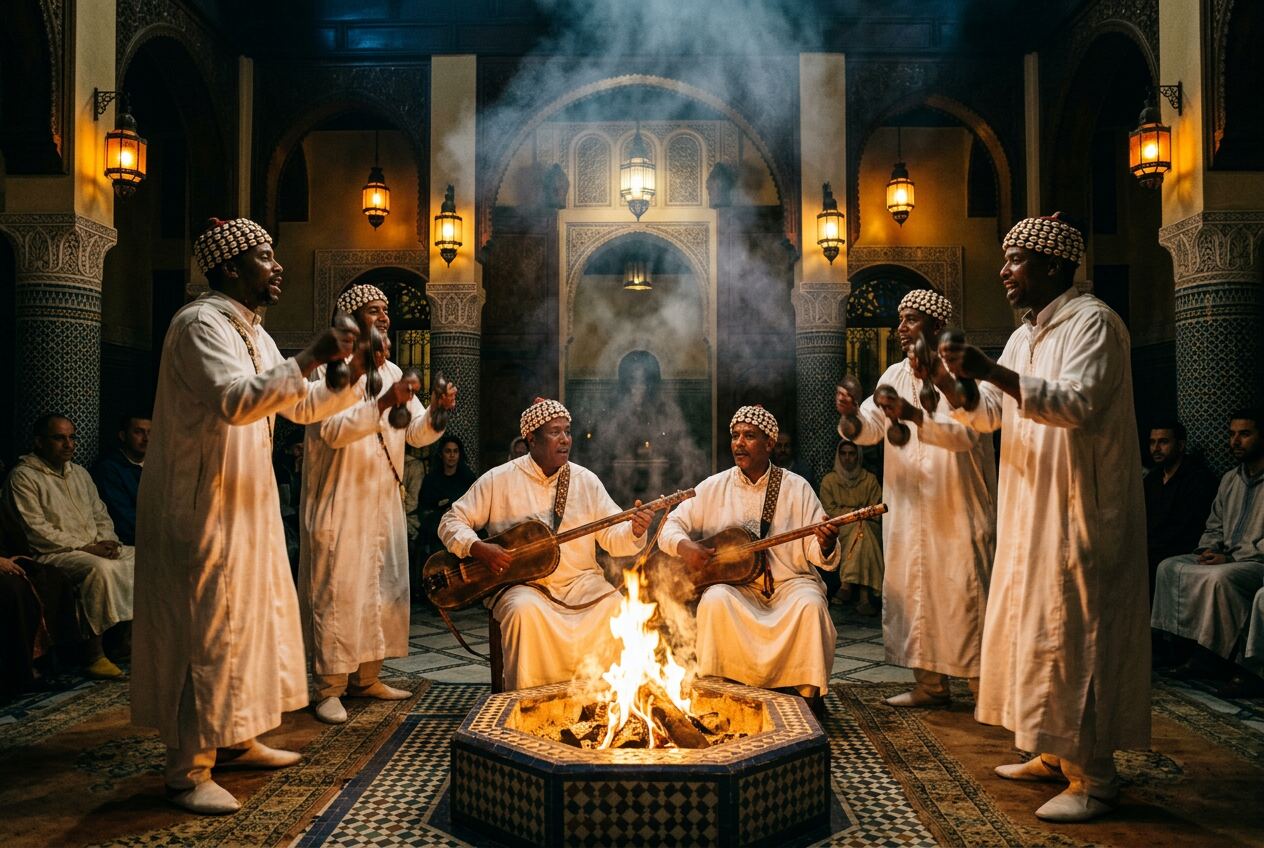
Gnawa masters sometimes say the right rhythm does not summon music first — it summons presence.