01
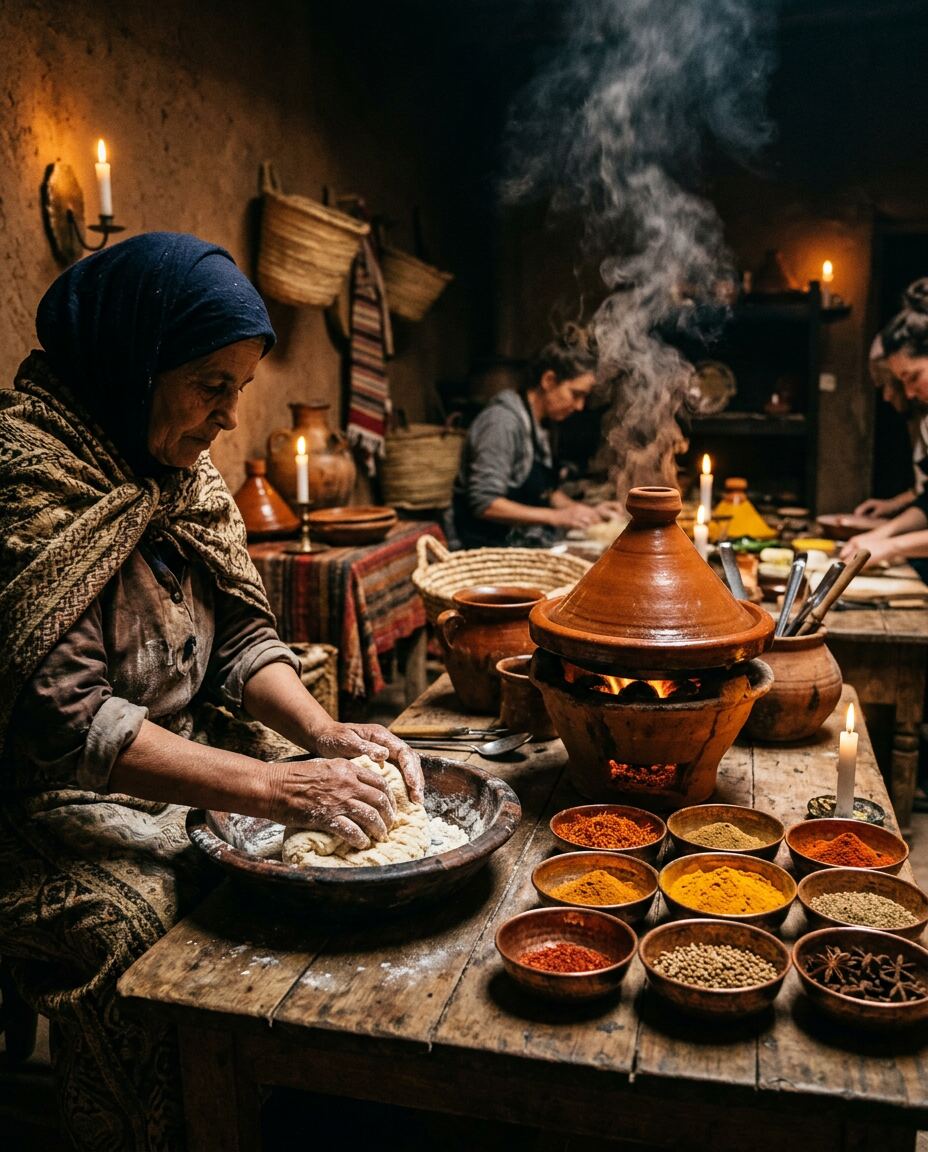
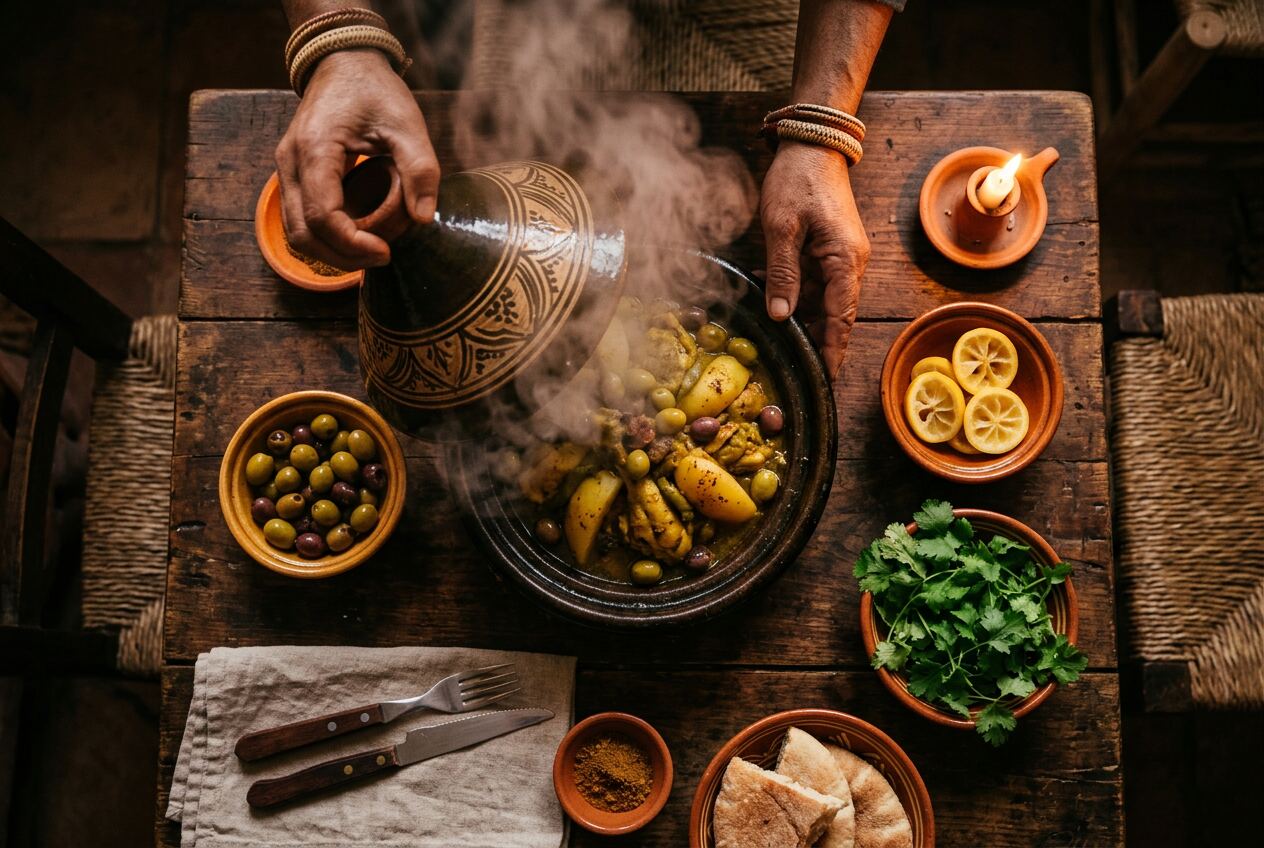
In some regions, the first steam from a new tagine is said to carry the blessing of the home into the food.
The Six Pillars · II
Fire, Spice & Memory
Ouchchou is the Morocco of kitchens, courtyards and charcoal fire — where memory is transmitted through spice, steam, bread and shared hands.
The Story
The cooking begins before the flame. It begins in the choice of cumin, in preserved lemon opened at the right moment, in the dough pressed with the heel of the palm. Ouchchou invites guests into a domestic universe where recipes are inseparable from voices, gestures and hospitality. The class is not staged as performance; it feels lived-in, intimate, almost secret. A table slowly fills with clay bowls, saffron, paprika, olives, coriander, butter and flour, while the room thickens with fragrance. As the tagine simmers, another layer reveals itself: food here is social memory. Bread is not a side dish but a daily pact. Mint tea is not a beverage but a ritual of welcome. A sauce reduced too fast tells you the fire was impatient; a perfect tagine tells you someone listened. Ouchchou is about tasting Morocco through technique, yes, but even more through the ethics of sharing, timing and attention.
Highlights
Heritage
Moroccan cuisine is the meeting ground of Amazigh, Arab, Andalusian, Jewish, Saharan and African influences. Home kitchens have preserved combinations of spice and ritual more faithfully than any formal archive.
01
In some regions, the first steam from a new tagine is said to carry the blessing of the home into the food.
02
Grandmothers still warn that pouring tea without height means the welcome is incomplete.
03
Old caravan stories say cumin kept away both illness and envy on the road south.