01
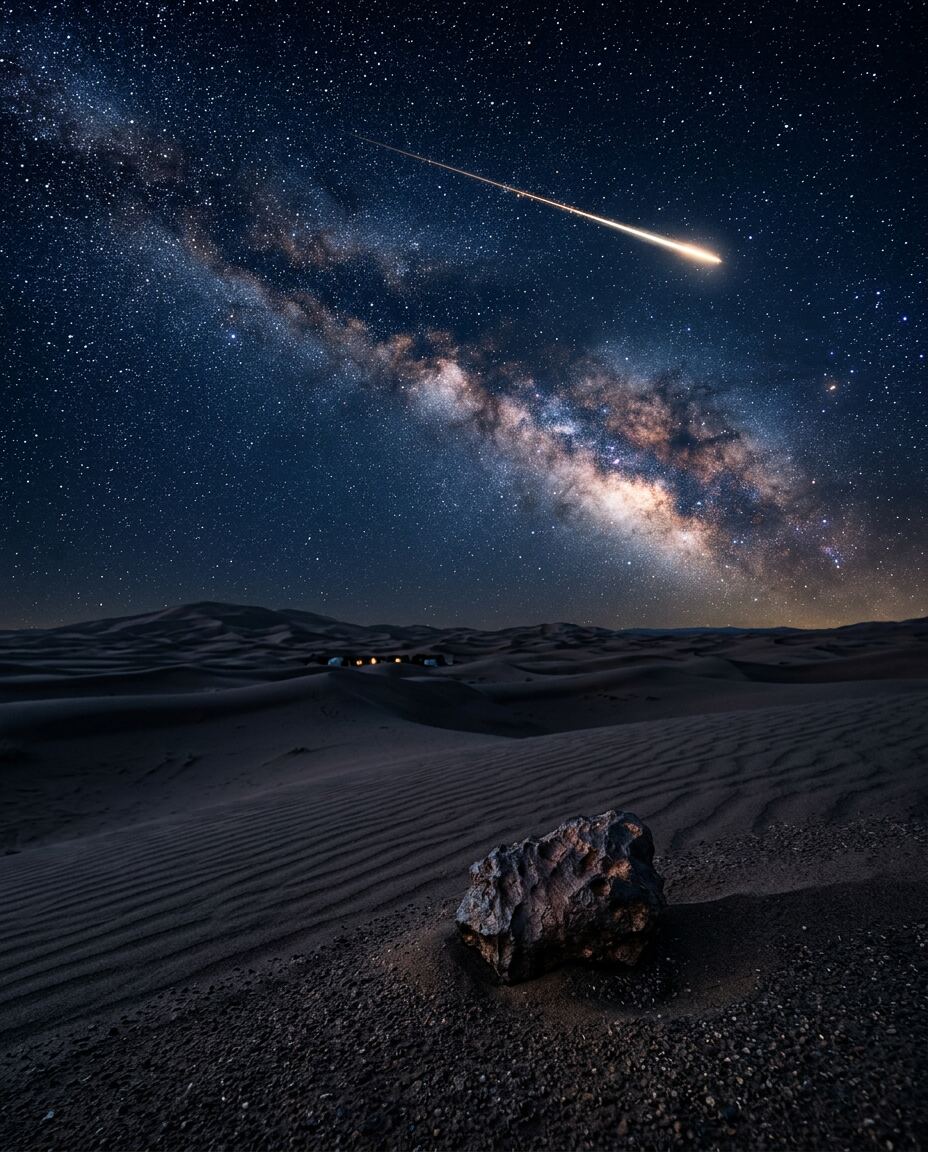
Some desert elders say meteorites are fragments of locked heavens, opened only for those who can read their fall.
The Six Pillars · V
On the Trail of Meteorites
Atri opens the desert as observatory: the Sahara as a place for reading stars, tracing meteors and listening to the sky through stories older than maps.
The Story
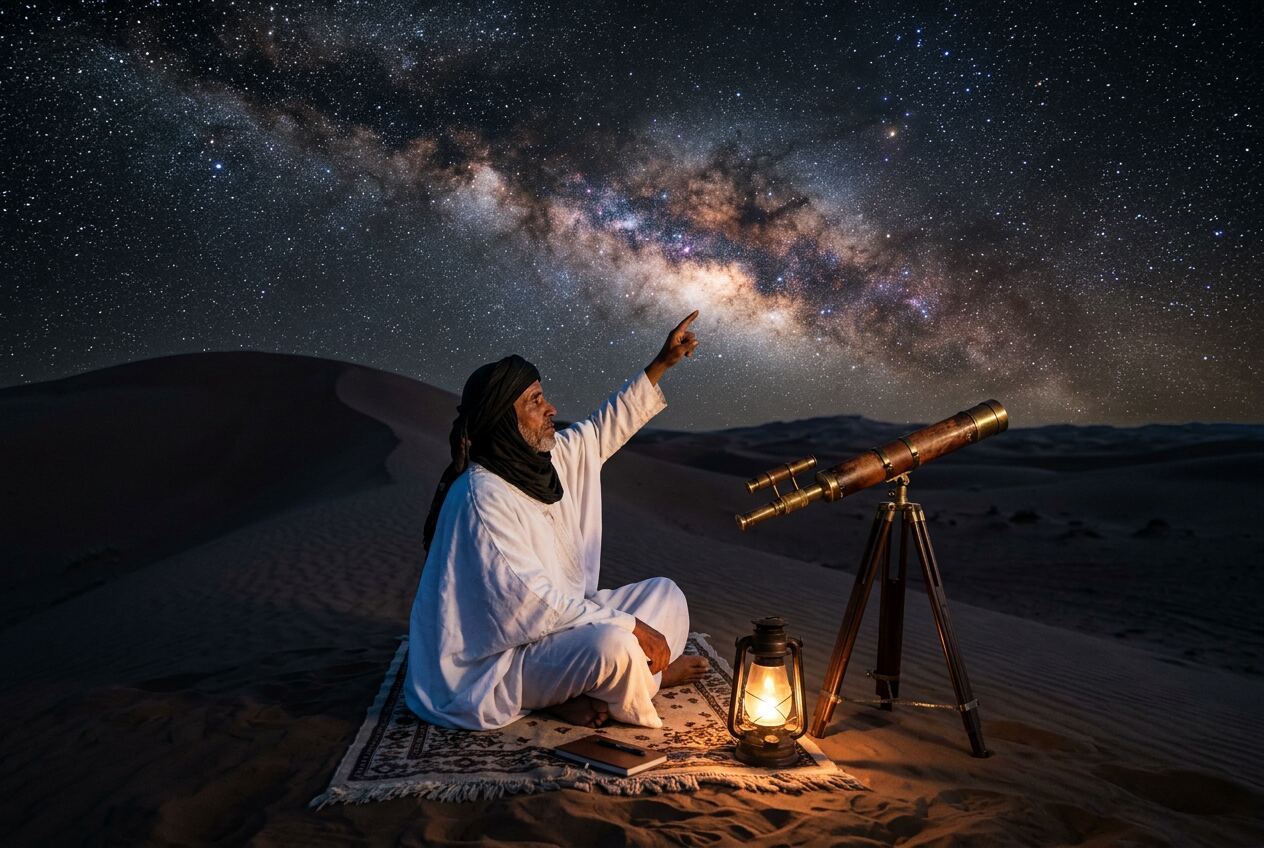
In the open desert the horizon is not a border but an instrument. Atri follows guides, desert readers and sky-watchers into the immensity where the night becomes legible. Here the stars are not decorative. They orient movement, anchor stories, measure season and suggest destiny. The experience pairs scientific wonder with oral cosmology: meteorites lying in sand once crossed unimaginable distances, while constellations are recalled through names, directions and tales that help travelers inhabit the darkness. Under a sky untouched by city glow, time feels altered. The eye slowly adjusts until the Milky Way looks almost physical. Every falling star becomes event, every stone an unanswered question. The desert is not empty in this pillar — it is dense with signs. Atri gives that density form through observation, silence and the sublime scale of the Saharan night.
Highlights
Heritage
Moroccan desert routes relied on celestial reading for navigation long before modern instruments. The trade roads of the Sahara carried astronomy, poetry and practical sky knowledge together.
01
Some desert elders say meteorites are fragments of locked heavens, opened only for those who can read their fall.
02
A shooting star is sometimes described as a message crossing from the unseen into the human night.
03
Certain constellations are still remembered through caravan names rather than scientific ones.