Rif Mountains · North
Chefchaouen
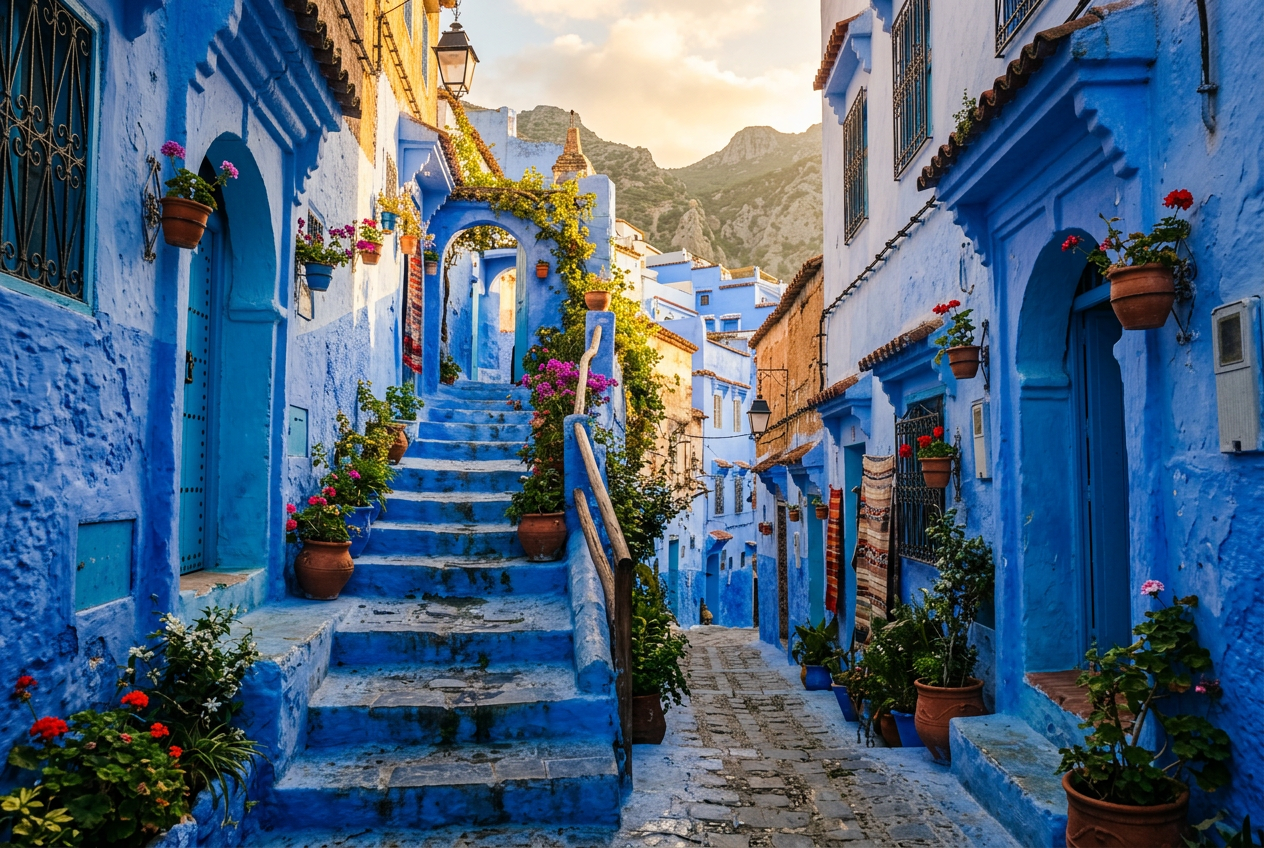
Chefchaouen sits in a fold of the Rif Mountains, its medina painted in cascading shades of indigo and cobalt. Founded in 1471 as a refuge for Andalusian Muslims and Jews fleeing the Reconquista, the city still feels half-Spanish, half-Berber, entirely itself.
Things to do in Chefchaouen
Plaza Uta el-Hammam
Mint tea on the main square at golden hour, with the red-walled kasbah lit from below.
Spanish Mosque hike
A 30-minute climb above town for the postcard view of the entire blue medina.
Akchour waterfalls
Day trip into Talassemtane National Park — gorge swims and the natural God's Bridge arch.
Weaver's souk
Handwoven wool blankets in stripes specific to each Rif tribe — the real local craft.
March–May and September–November. Summer is busy and warm; winter is cold and wet but the blue glows brighter against grey skies.
Closest airports are Tangier (TNG, 2h drive) and Fes (FEZ, 4h drive). CTM buses run direct from Fes, Tangier, Casablanca and Rabat. There is no train station.
Chefchaouen travel FAQ
Why is Chefchaouen blue?
Several theories — Jewish refugees in the 1930s painting the walls as a symbol of sky and heaven is the most documented.
How long to stay in Chefchaouen?
Two nights is the sweet spot — one full day for the medina, one for Akchour or a Rif village trek.
Is it walkable?
Yes, but steep. The medina is a stepped warren; pack flat shoes with grip.